The practical idea
Technical access, useful information and clear evidence remain the foundation. AI discovery adds new questions about how that information is retrieved, represented and cited.
Generative Engine Optimization is often presented as a new discipline that replaces SEO. That framing is not useful. Modern discovery is broader than a traditional results page, but the systems that make information crawlable, understandable and trustworthy still matter.
The practical question is not whether to choose SEO or GEO. It is how to preserve strong search foundations while making expertise easier for answer engines to retrieve, interpret and cite.
The discovery surface has expanded
People now move between Google results, AI Overviews, ChatGPT, Gemini, Perplexity and Copilot. Each environment assembles information differently, but all of them depend on accessible sources, clear entities, coherent information architecture and evidence that can be connected to a claim.
This changes the unit of optimization. A page still matters, but so do the relationships between the author, organization, topic, evidence and other trusted sources.
What does not change
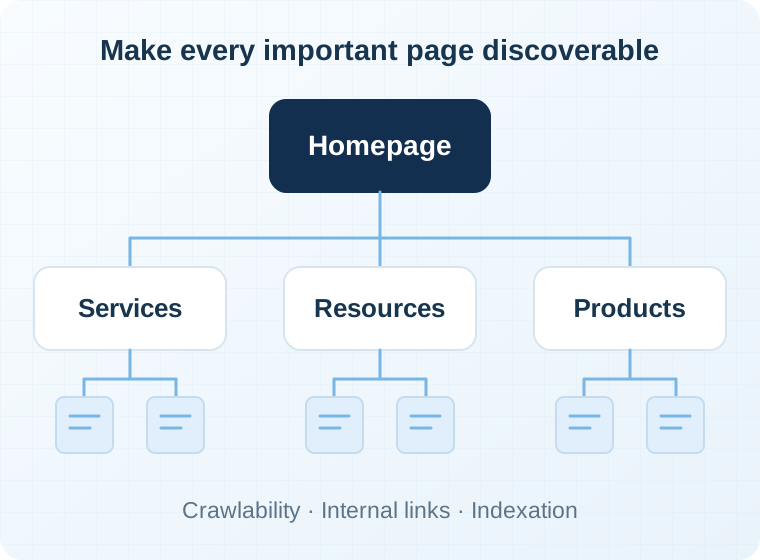
- Crawlability and indexation: important information must be discoverable without unnecessary technical friction.
- Intent and usefulness: content must solve a real question better than a thin summary assembled for a keyword.
- Information architecture: related concepts need clear hierarchy, internal links and stable URLs.
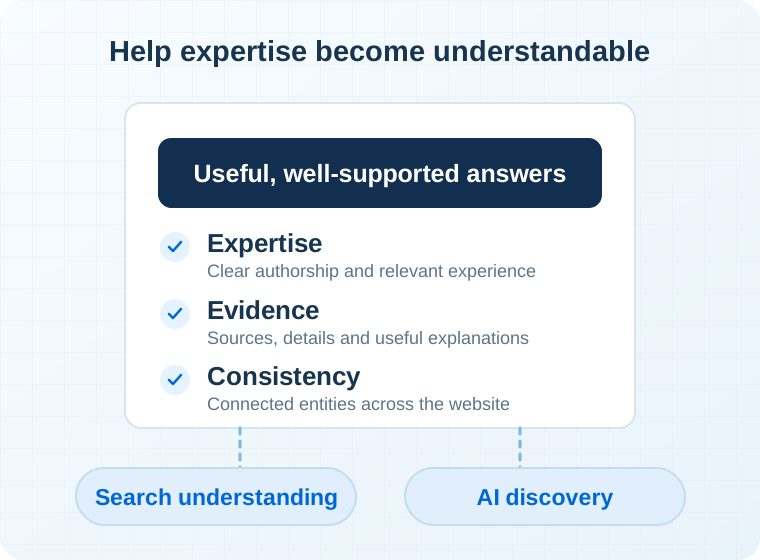
- Authority: first-hand experience, credible authorship, original evidence and consistent professional identity remain valuable.
- Measurement discipline: teams still need baselines, annotations and an honest distinction between correlation and causation.
What changes for AI-powered discovery
AI systems often answer a question before a user visits a website. That increases the importance of concise factual passages, explicit entity relationships and evidence that can stand on its own when extracted from the surrounding page.
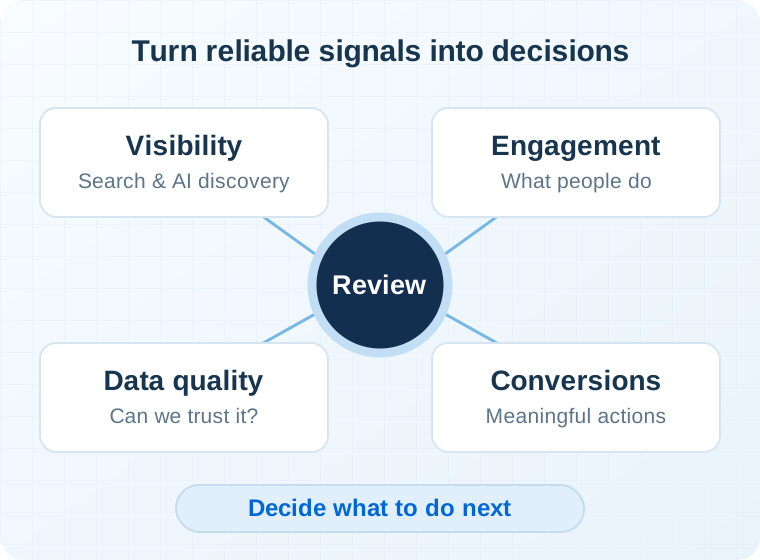
It also creates new measurement questions. Rankings and clicks remain important, but they no longer describe every useful outcome. A combined program can also monitor answer inclusion, cited domains, brand mentions, source consistency and the prompts that expose gaps in how an organization is understood.
A practical combined workflow
- Audit technical access, canonicalization, rendering and indexation.
- Map the entities, questions and decisions that matter to the audience.
- Strengthen topic architecture and internal links before multiplying pages.
- Add clear authorship, methodology, dates, definitions and supporting evidence.
- Test representative prompts across search and AI environments.
- Measure visibility as a portfolio of signals rather than one universal score.
The operating principle
GEO should make a strong search program more precise, not more theatrical. Start with technical quality and useful information. Then make the relationships, expertise and evidence unmistakably clear to both people and machines.
Practical extension
A question to work through
Suppose a buyer asks whether your product fits a particular use case. On the relevant product page, look for a direct answer, the conditions that affect it and evidence a reader can check. Then follow the internal links: can someone reach the detailed specification or explanation without starting again?
That is a useful review exercise for an existing page. Google says AI Overviews and AI Mode require no special AI markup; supporting pages must be indexed and eligible to appear with a snippet. Meeting those requirements does not guarantee inclusion. See Google’s guidance on AI features.
Finish with one concrete task: name the page, the unanswered question, the evidence needed and the person who can verify it.