Understand the current picture
Establish a visibility baseline around relevant questions, entities and sources rather than isolated prompts.
GEO & AI search
Build on your SEO foundations to improve how your organization and information are understood, retrieved and referenced across AI discovery.
Where I focus
Start with the information your organization publishes and the questions your audience asks. Then define what can be improved and how to observe it.
Establish a visibility baseline around relevant questions, entities and sources rather than isolated prompts.
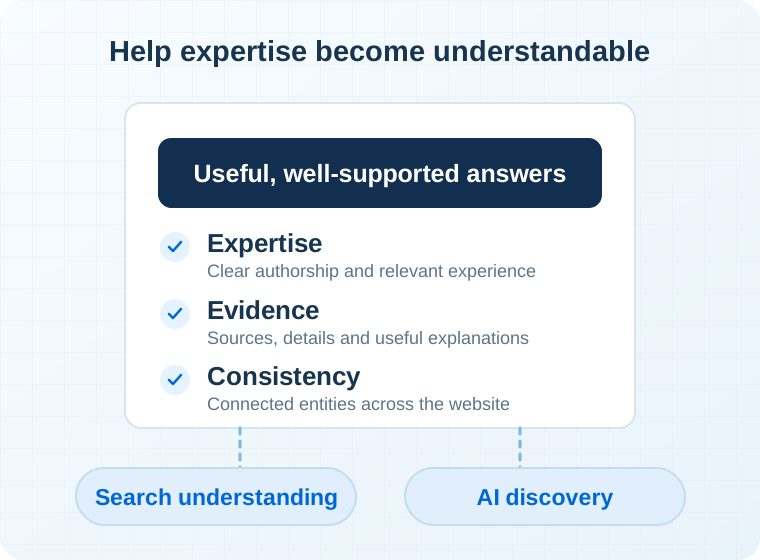
Review entity clarity, useful answers and supporting evidence so readers and systems can understand your expertise.
Turn findings into testable changes. Monitor answers, citations and related search evidence with the context needed to interpret them.
Inside the work
AI visibility work becomes more useful when the question set, evidence and proposed changes are explicit.
Choose representative audience questions, markets and discovery platforms. Record the context so later observations can be compared with the starting point.
Review how the organization is described, which pages are referenced and where information is incomplete or inconsistent. Separate the observation from an explanation that still needs testing.
Select a change with a clear purpose, such as clarifying a service’s scope or supporting an important claim. Record publication changes and review the evidence again.
Typical deliverables
GEO work should produce clear hypotheses and measurable observations. No one can promise a particular ranking, answer or citation from an AI system.
Research & insights
Read how SEO foundations relate to AI search, and where the questions and measurement need to evolve.
Read the articleA connected approach
Technical systems, content, markets and measurement affect one another. Where the evidence points to another area, the roadmap should connect them.
Explore all expertiseBefore we begin
Keep platform-specific facts separate from your wider content and search strategy.
Google’s current guidance says it does not require special AI markup or an llms.txt file for visibility in its generative search features. The starting point remains accessible pages and useful information. This statement concerns Google; other services can have different requirements. Read Google’s AI optimization guide.
For Google, the Generative AI performance report provides impressions for supported AI search features. Those observations answer a different question from website visits or enquiries. Other platforms and sampled answers need their own context and limitations. See what Google’s report includes.
Start with your important products or services, priority markets, recurring customer questions and authoritative pages. Access to people who know the subject helps resolve factual gaps. Existing visibility observations are useful if their prompts, dates and platform context are available.
A useful next step
Share your website, your market and what you want to understand about AI search.