The practical idea
Track patterns across a stable prompt set. Preserve the answer, context and cited sources so observations can be checked and connected to practical improvements.
AI visibility cannot be reduced to one universal rank. Answers can change by platform, model, location, account context and prompt wording. A useful measurement system accepts that variability and still produces evidence that teams can act on.
Start with a representative prompt set
Build prompts from real audience decisions rather than a list of brand mentions. Include category discovery, comparisons, definitions, problem diagnosis, product selection and expert questions. Group prompts by market, language, funnel stage and business importance.
Keep a stable benchmark set for trend analysis and a rotating research set for emerging questions.
Track several visibility signals
- Answer inclusion: whether the brand, product, expert or resource appears.
- Citation presence: whether the site is linked or named as a source.
- Citation quality: which page is cited and whether it supports the claim being made.
- Share of relevant mentions: visibility relative to appropriate competitors within the same prompt set.
- Message accuracy: whether important facts, positioning and limitations are represented correctly.
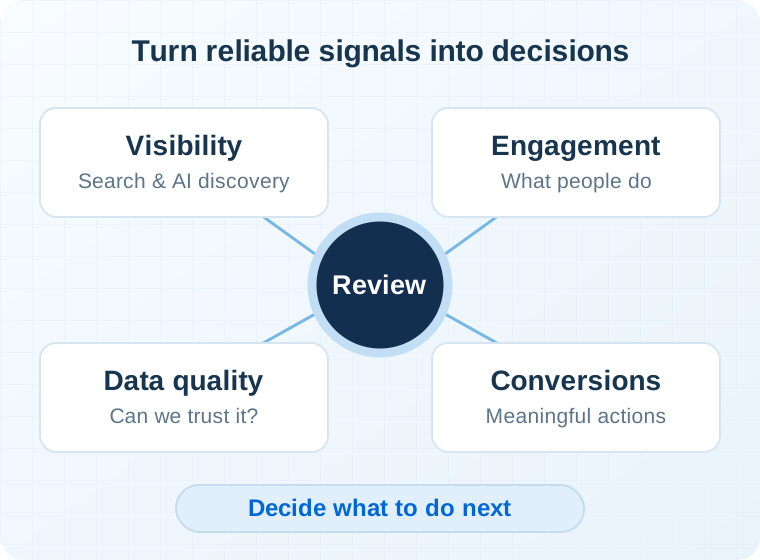
- Downstream behavior: referral traffic, assisted conversions, branded search and engagement with cited resources.
Preserve the evidence
Store the prompt, platform, model or product surface, date, market, answer, cited URLs and screenshot. Without this context, a visibility score is difficult to audit and almost impossible to explain after the answer changes.
Connect AI monitoring with conventional search data
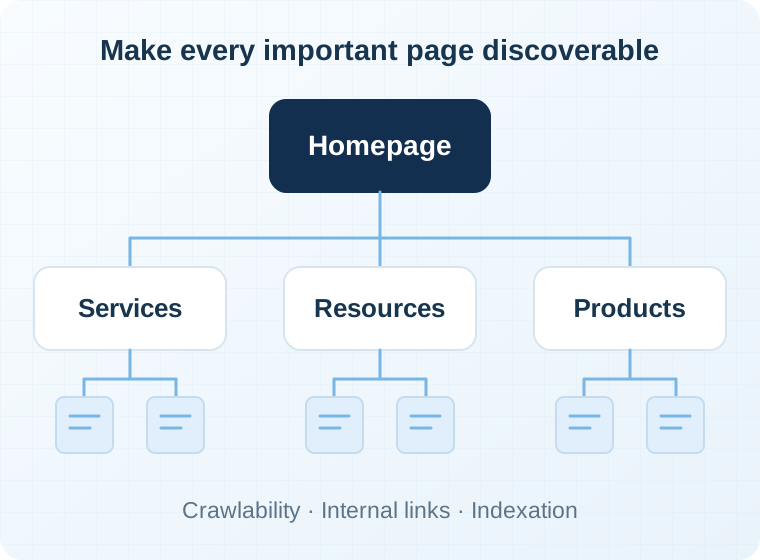
Search Console, analytics and crawl data remain necessary. They can reveal whether the pages most often cited by AI systems are indexable, internally supported and useful after the click. They also help distinguish an AI visibility issue from a broader technical or demand problem.
Use measurement to improve the system
Recurring gaps usually point to one of four causes: the relevant page does not exist, the entity relationship is unclear, the evidence is weak, or a stronger external source is easier to retrieve. Each cause requires a different response.
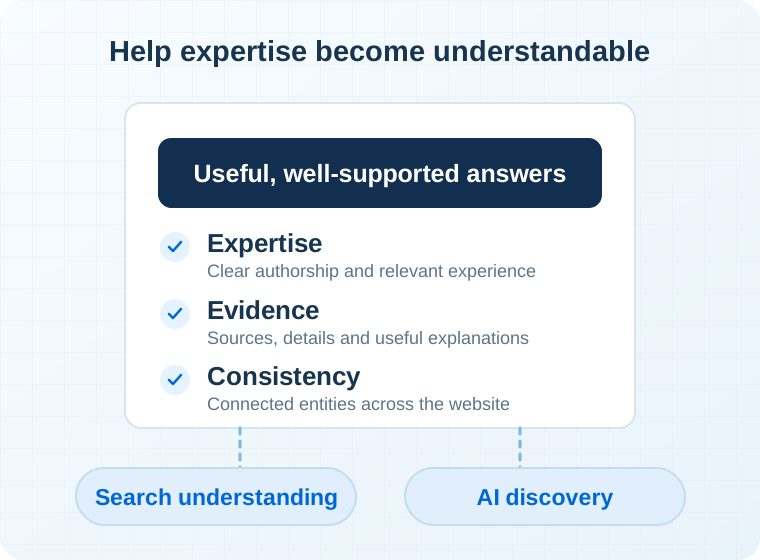
The objective is not to manipulate a single answer. It is to build a body of clear, supported information that remains useful across many discovery environments.
Report ranges and patterns
Because outputs vary, report frequency, coverage and directional change rather than false precision. A credible dashboard should show where the brand appears, what sources are preferred, which topics are consistently weak and what changed after an intervention.
Practical extension
Keep observation, exposure and visits separate
Reporting note · 20 September 2026
Search Console’s Generative AI performance report now provides impressions for AI Overviews and AI Mode, grouped by page, country, device or date. Google notes that a report may be absent when a site has insufficient impressions. Use the official report documentation when setting your baseline.
Build the report around three separate questions:
- What did a test answer say? Keep the prompt and cited sources with the observation.
- How often were our links shown? Label the platform report, dates and filters beside its impression data.
- What happened after a visit? Review attributed visits and useful actions in analytics. OpenAI documents
utm_source=chatgpt.comfor ChatGPT referral links in its publisher FAQ.
Read these together, keeping their units separate. An observed citation, an impression and a visit each answer a different question.