Market & audience
Review market-specific search demand and intent to guide which content and topics belong in each region.
International SEO
Connect language, market demand and technical architecture. Build a multilingual search system your team can maintain as the website grows.
Where I focus
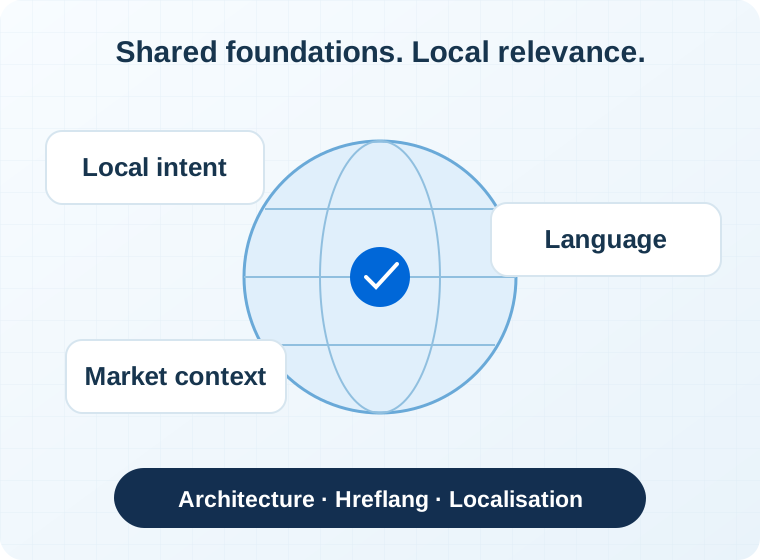
International search needs more than translated pages. The website must reflect what people need in each market and how those versions relate.
Review market-specific search demand and intent to guide which content and topics belong in each region.
Assess URL structures, hreflang, canonicals and language relationships so the technical system is coherent.
Define content workflows, ownership and quality checks so local relevance survives the publishing process.
Inside the work
The technical setup and the local content need a shared plan. Begin with the markets you can support well, then define how each version is maintained.
Identify language, audience, offer and operational differences. Check which pages need equivalent versions and which need a distinctly local purpose.
Document the URL structure, corresponding pages, canonical decisions and language annotations. Check representative page sets before extending the pattern across the site.
Agree who reviews terminology, updates factual details and signs off publication. Add checks for new, moved or retired pages so the relationships stay current.
Typical deliverables
The work connects the technical rules with the people and processes responsible for each market. Clear ownership is part of the architecture.
Selected work · Digital media
Explore a multimarket SEO strategy for an Arabic-language media platform working across regional audiences.
Read the case studyA connected approach
Technical systems, content, markets and measurement affect one another. Where the evidence points to another area, the roadmap should connect them.
Explore all expertiseBefore we begin
Some pages are equivalents; others serve different needs. The implementation should reflect that distinction.
No. It describes relationships between language or regional versions; it does not translate the page or assess whether the content suits the audience. Google’s guidance also requires the linked versions to reference one another. Read the localized-version requirements.
Not automatically. Product availability, services, terminology and customer questions may differ. Start with real market needs and maintainable content. Equivalent pages should be mapped consistently, while genuinely different offers need their own editorial decisions.
A clear list of markets and languages, proposed URLs, page equivalents, local reviewers and a publishing owner. A representative set of translated pages and access to a test environment can help identify template and relationship problems before the same pattern is rolled out widely.
A useful next step
Tell me which regions and languages matter, and how your website is structured today.