Understand the opportunity
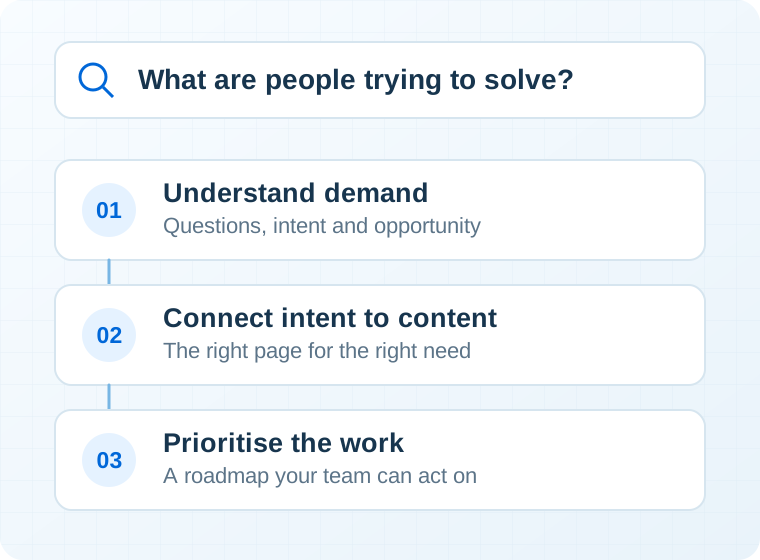
Map search demand, intent and competitors to identify relevant topics, gaps and existing strengths.
SEO & search strategy
Connect what people search for with what your business needs to achieve. Build a roadmap your content, product and marketing teams can use.
Where I focus
Useful strategy brings business context, audience needs and competitive evidence into the same conversation.
Map search demand, intent and competitors to identify relevant topics, gaps and existing strengths.
Connect keyword systems and audience needs with page purpose, content architecture and editorial priorities.
Sequence the work around impact, capacity and technical dependencies, with clear ownership and measures.
Inside the work
The strategy should help an editor decide what belongs on a page, what evidence it needs and how it supports the wider website.
Start with the products, services and audiences that matter to the business. Identify the questions people need answered before they can take a useful next step.
Compare those needs with current pages, search evidence and competitor coverage. Decide where to improve an existing page, consolidate overlapping material or create something new.
Connect each priority with an owner, required expertise, dependencies and a review point. Balance opportunity with the team’s capacity to produce useful, credible content.
Typical deliverables
The roadmap explains what to work on and why. It gives teams a common view of the opportunities, decisions and evidence behind the strategy.
Selected work · E-commerce
Explore a search performance strategy for a specialist e-commerce business serving European audiences.
Read the case studyA connected approach
Technical systems, content, markets and measurement affect one another. Where the evidence points to another area, the roadmap should connect them.
Explore all expertiseBefore we begin
These decisions help prevent the roadmap from becoming a disconnected list of keywords or publishing tasks.
No. Related searches may be served well by one useful page. Page decisions should reflect the reader’s purpose, the content you can genuinely contribute and the existing architecture. Publishing separate pages for every variation can create unnecessary overlap. Google’s people-first content guidance supports this focus on usefulness.
Business priorities, audience knowledge, product or service details, existing content, available search data and editorial capacity. Subject-matter experts help distinguish an original, useful contribution from material that only repeats what is already available.
Give priorities a review point and record why each decision was made. New products, changing demand, implementation results or new evidence can change the sequence. The plan should show which assumptions need revisiting so your team can adapt it deliberately.
A useful next step
Tell me about your audience, your priorities and the decisions your team needs to make.